The Second Brain
You have a folder of notes you paste into a chat and re-read every time, and it is slow, it dilutes the answer, and it cannot settle an argument it has with itself. Turn that pile into a corpus: plain text files, one question each, an index a machine can read, and a review that keeps it true after three months. No database, no embeddings, no vector store.
- trending_upIntermediate
- schedule6h 19m
- menu_book12개 강의
- publicEnglish
- workspace_premiumBasic
개요
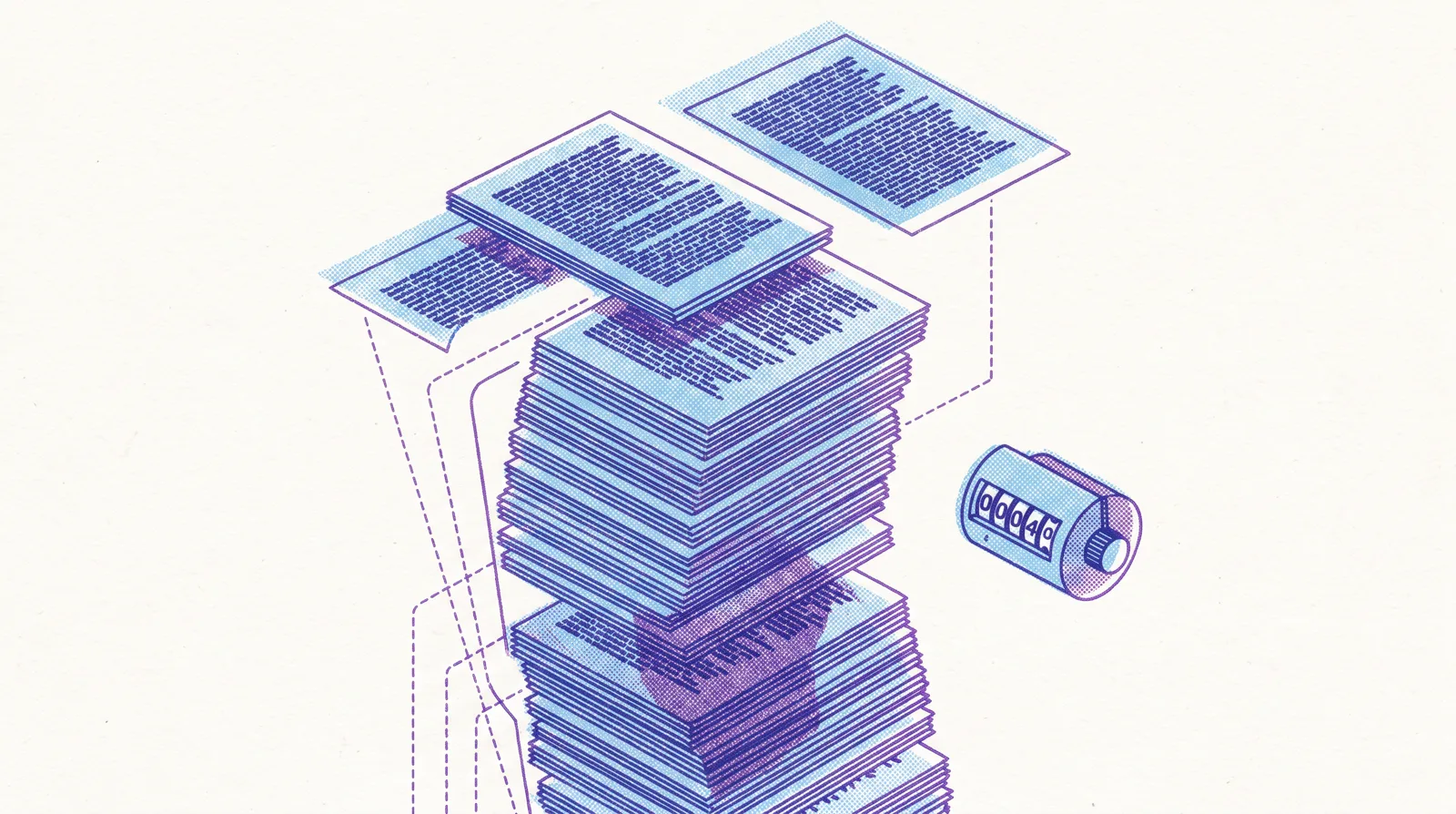
This is the segment that comes after the one page on your desk got too big. You already keep notes. A folder of them, grown by accretion: meeting minutes typed live, a handover document somebody started and never finished, a pasted email thread, a file called misc. When you have a question you paste the lot into a chat and re-read it, every time, because a chat has no memory. That works until the pile is large enough to be slow, expensive, and — the part nobody warns you about — undecided. It ties on the questions that matter, it answers the wrong search because you wrote in jargon and search in plain English, and the one sentence that settles an argument is outvoted by two thousand words that do not. You will measure your own pile first, using the cost arithmetic from AI Without the Hype rather than re-deriving it, and the number will be larger than you think. Then you will turn it into a corpus: one document per question, a title that states the answer, what to summarise and what to keep word for word and what must never go in at all. You will give every document a name that survives a search and a line of the words you would actually type. You will generate an index — one line per document, small enough to paste whole — with five lines of awk you can read, and you will answer a question the pile could not, at a fraction of the tokens. Then the lesson that decides whether any of it was worth doing: what you do the first time something changes and two of your own documents disagree. A supersedes line, four checks a machine can run, and a twenty-minute quarterly review that a person does. You finish with your own folder measurably better — actually navigable, actually searched, answering a question it could not answer at the start. **There is one hard prohibition and it is the point of the segment.** No embeddings, no vector store, no database of any kind. The moment it reaches for one it becomes a different course. The whole idea is that the structure is plain files and plain text a human can also read, because the thing that kills every personal knowledge system is not retrieval quality, it is that nobody maintains it, and a folder of text files survives a laptop change, a job change and eleven years. **Redaction is not optional here.** A personal corpus is the easiest place to keep material that should never have been kept, so every lesson that captures real work states what does not go in, and why, and the gate is at the moment you write rather than the moment you paste. AI Without the Hype is assumed, and AI at Work Without Leaking the Company owns the data classes this segment applies rather than rebuilds. You need a folder of your own notes, a terminal or PowerShell, and a chat interface. Nothing is installed and nothing runs in the background.
강의 커리큘럼 · 4개 모듈
lock접근 시 이용 가능- 01 The Pile, Measured3개 강의·1h 27m
Every number in this module is measured on the learner's own folder. It is always larger than they expect, and the argument only lands because it is their number and not a slide.
- 02 One Document, One Question3개 강의·1h 46m
A pile records events; a corpus records conclusions. The module is the machinery that turns one into the other, and the hardest part throughout is deciding what to leave behind.
- 03 Finding It, and Using It3개 강의·1h 34m
The index is the one file small enough to paste, and it carries the words that are not in the documents. That is what makes the corpus cheaper than the pile it replaced, and it is the payoff for two…
- 04 Keeping It Alive3개 강의·1h 32m
The pile-to-corpus work is a weekend. Whether it is still true in three months is decided here, by what the reader does the first time two documents disagree. The module ends with the corpus…
자주 묻는 질문
- The Second Brain에서 무엇을 배우나요?
- You have a folder of notes you paste into a chat and re-read every time, and it is slow, it dilutes the answer, and it cannot settle an argument it has with itself. Turn that pile into a corpus: plain text files, one question each, an index a machine can read, and a review that keeps it true after t
- 사전 경험이 필요한가요?
- The Second Brain을 시작하기 전에 기초 지식이 있으면 좋아요.
- The Second Brain은 얼마나 걸리나요?
- The Second Brain은 4개 모듈과 12개 강의로 구성되어 있고, 자신의 속도로 학습할 수 있어요.
- 어떻게 접근하나요?
- The Second Brain은 모든 유료 구독에 포함되어 있어요.
프로그래밍의 다른 강의