Continuità e Ripristino — Il Restore che Nessuno Ha Testato
Recovery point e recovery time come cose che le persone sentono, non due acronimi. Un'analisi dell'impatto sui processi aziendali condotta con numeri reali, quattro tier di ripristino quotati, backup che sono stati effettivamente ripristinati, e un esercizio di recovery eseguito contro un cronometro e documentato in modo onesto. Un corso indipendente, non affiliato o endorsato da ISACA.
- trending_upIntermediate
- schedule7h 54m
- menu_book12 lezioni
- publicEnglish
- workspace_premiumBasic
Briefing
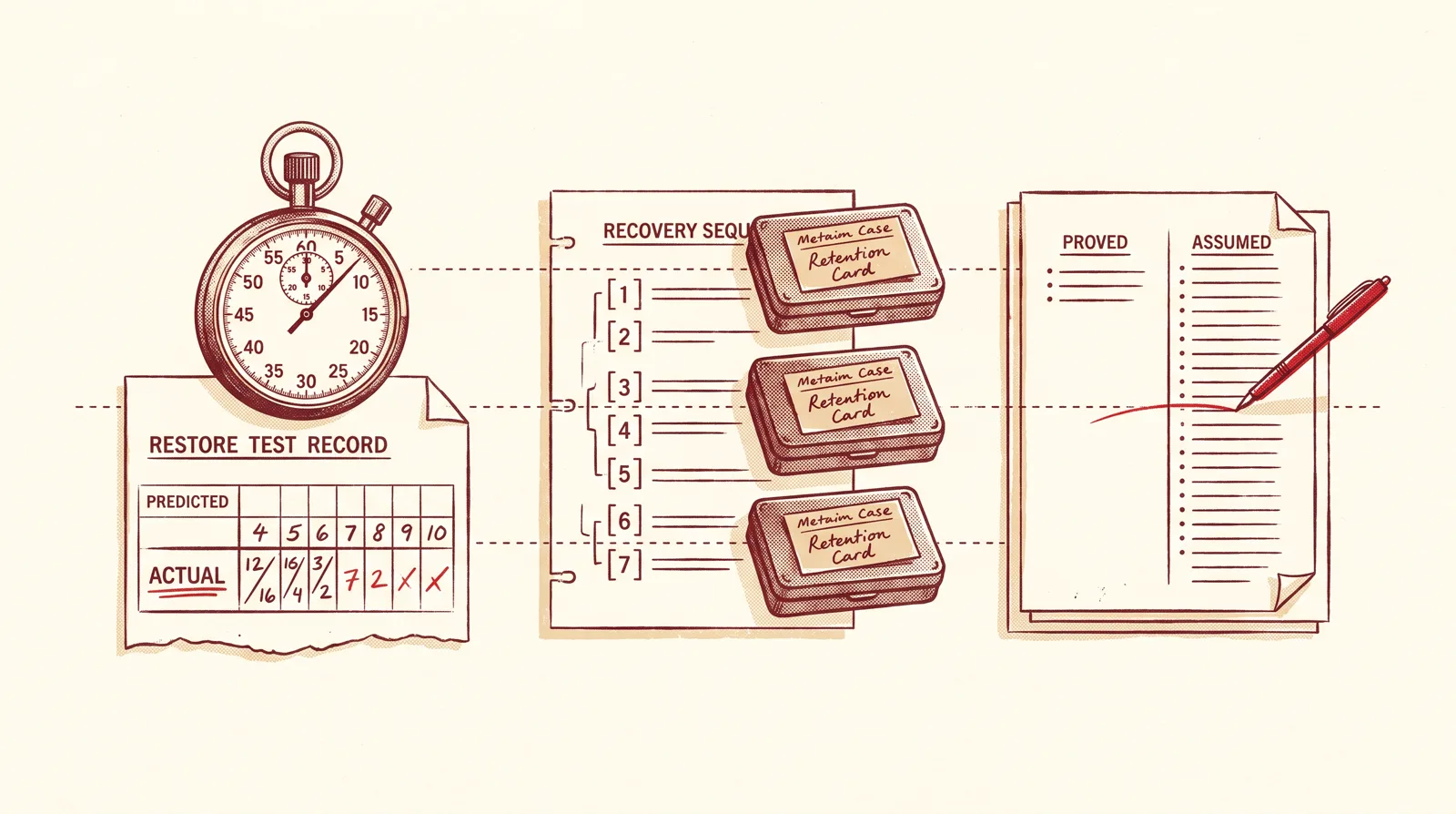
Chiunque in questa stanza sa già recitare i due acronimi. Li hai imparati nel segmento R1 come trappola d'esame e puoi rispondere a una carta mista in tre secondi. Questo segmento non ripete una sola definizione. Li assume dal primo minuto e va oltre verso ciò che un'organizzazione deve effettivamente produrre: un ripristino che sia stato provato funzionare. Un backup che segnala successo ogni notte, e che nessuno ha mai letto, è un'affermazione non una capacità. Un recovery time scritto in un piano e mai misurato è un numero inventato da qualcuno. Uno standby caldo che non è mai stato promosso è un acquisto, non una protezione. L'intero soggetto di questo segmento è il divario tra quello che le organizzazioni credono del loro ripristino e quello che è vero, e il modo in cui chiudi quel divario è facendolo, misurandolo e scrivendo quello che hai provato e quello che hai solo assunto. In dodici lezioni costruisci un'analisi dell'impatto sui processi aziendali con numeri che hai prodotto, traccia una curva di perdita che risulta essere una scala piuttosto che una pendenza, mappa un processo verso l'esterno fino a quando non esce dal tuo controllo, quotizza quattro tier di ripristino e raccomandane uno, progetta un set di backup contro il guasto più probabile che lo richieda, esegui un vero restore con un cronometro, sequenzia un recovery in modo che il lavoro parallelo sia davvero parallelo, esegui il tutto contro un cronometro su qualcuno che non l'ha scritto, e scrivi il report di due pagine su cui un direttore agirà. Ogni modulo produce un numero che hai calcolato tu stesso. Senza questo diventa un glossario, e un glossario è l'unica cosa che la continuità e il ripristino non possono permettersi di essere. Questa è la metà dell'interruzione del soggetto. La metà dell'incidente — chi lo dichiara, chi viene svegliato, chi parla al regolatore, e il tabletop che scopre se qualcosa di tutto questo è vero — è il segmento B5, e questo segmento passa a esso e ritorna su cuciture chiaramente segnate. Questa è un corso indipendente. Non è affiliato, endorsato o approvato da ISACA, e non riproduce materiale ISACA. I soli fatti derivati da ISACA utilizzati sono i nomi dei domini d'esame pubblicati pubblicamente e le ponderazioni. Ogni scenario e domanda qui è stata scritta per questo corso.
Programma del corso · 4 moduli
lockSblocca con l'accesso- 01 Quello che l'azienda effettivamente non può perdere3 lezioni·1h 34m
R1 ha insegnato le definizioni e la trappola dell'esame e questo modulo non le ripete. Le assume entrambe e le trasforma in numeri. Il primo numero che producete voi stessi è la dimensione della pila…
- 02 Livelli di Ripristino e Cosa Costa Ciascuno3 lezioni·1h 45m
Esistono solo quattro forme di ripristino e i nomi dei prodotti cambiano ogni anno. Questo modulo denomina il tuo livello onesto piuttosto che quello nel contratto, prezza il divario verso uno più…
- 03 Backup Che Sono Stati Ripristinati3 lezioni·1h 46m
Un backup che segnala successo e non è mai stato riletto è una pretesa, non una capacità. Questo modulo progetta un set di backup contro il guasto più probabile che ne abbia bisogno, elenca tutto ciò…
- 04 Il Test3 lezioni·2h 49m
Un esercizio di recupero non è una dimostrazione che il piano funziona. Esiste per trovare dove il piano è silenzioso, e il rapporto che segue contiene tre cambiamenti, non undici. Il numero che…
Domande frequenti
- Cosa imparerò in Continuità e Ripristino — Il Restore che Nessuno Ha Testato?
- Recovery point e recovery time come cose che le persone sentono, non due acronimi. Un'analisi dell'impatto sui processi aziendali condotta con numeri reali, quattro tier di ripristino quotati, backup che sono stati effettivamente ripristinati, e un esercizio di recovery eseguito contro un cronometro
- Ho bisogno di esperienza precedente?
- È consigliata una certa conoscenza precedente prima di iniziare Continuità e Ripristino — Il Restore che Nessuno Ha Testato.
- Quanto tempo richiede Continuità e Ripristino — Il Restore che Nessuno Ha Testato?
- Continuità e Ripristino — Il Restore che Nessuno Ha Testato include 4 moduli e 12 lezioni. Impari al tuo ritmo.
- Come accedo?
- Continuità e Ripristino — Il Restore che Nessuno Ha Testato è incluso in qualsiasi abbonamento a pagamento.
Altro in Programming