Debugging: Finding It Yourself
The half of programming nobody teaches. You take one working program, break it nine ways, and find every fault by elimination rather than by staring at it. Ends with the kind of bug that raises no error at all.
- trending_upBeginner
- schedule5h 21m
- menu_book9個のレッスン
- publicEnglish
- workspace_premiumBasic
ブリーフィング
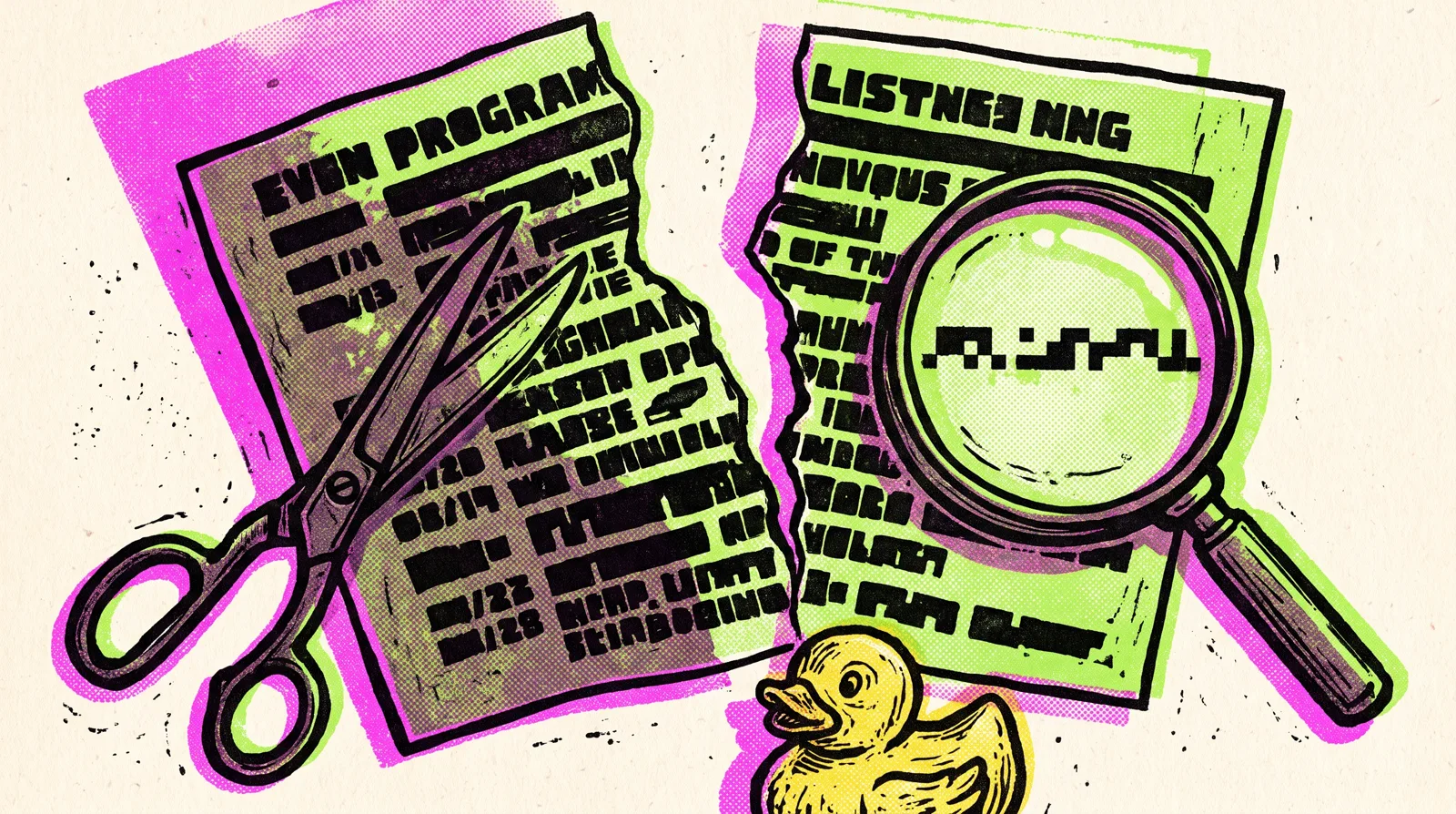
Every beginner course stops at "and now it works". Then the learner goes home, changes one line, and has no method for what happens next. This segment is the method. One small program — a bill splitter, about twenty lines — gets broken repeatedly and you get it back. You will read a traceback properly instead of scrolling past it. You will cut a file in half with `exit()` and cut it in half again until two lines are left. You will comment out everything except one function and drive it directly. You will print a value raw, then stripped, then lowered, so you can see the transformation instead of reasoning about it. Then the gauntlet: missing colon, wrong quote characters, stray whitespace, indentation, `=` where you wanted `==`, a result you never stored, two functions with the same name, an input asked for twice, a `TypeError` on text that was never converted, and text glued together where you meant to add numbers. Six of those tell you something is wrong. The rest do not say a word, and those are the ones that reach other people.
コースアウトライン · 3個のモジュール
lockアクセスで解放- 01 Reading What It Already Told You3個のレッスン·1h 9m
A traceback is read from the bottom. The last line is a sentence. The line number above it is where Python gave up, which is not always where you went wrong. Read it, then act. Guessing before…
- 02 Elimination, Not Inspiration3個のレッスン·1h 37m
Real troubleshooting is elimination. You do not find the fault by thinking harder about the whole file; you find it by making the file smaller until there is nowhere left for it to hide.
- 03 The Gauntlet3個のレッスン·2h 35m
One fix, one run. A file with four changes in it and a fresh error tells you nothing about which change caused what.
よくある質問
- Debugging: Finding It Yourselfでは何を学べますか?
- The half of programming nobody teaches. You take one working program, break it nine ways, and find every fault by elimination rather than by staring at it. Ends with the kind of bug that raises no error at all.
- 事前の経験が必要ですか?
- いいえ — Debugging: Finding It Yourselfは基礎から始まり、初心者に適しています。
- Debugging: Finding It Yourselfはどのくらいの時間がかかりますか?
- Debugging: Finding It Yourselfには3個のモジュールと9個のレッスンが含まれています。自分のペースで学習できます。
- アクセスするにはどうすればよいですか?
- Debugging: Finding It Yourselfは任意の有料サブスクリプションに含まれています。
プログラミングのその他